At 76 Xingye Road in Shanghai stands a small Shikumen building where the Communist Party of China (CPC) was founded.
More than a century later, visitors from around the world come to this historic site to trace a journey that has transformed the country and improved the lives of millions — from China's struggle for national independence and people's liberation to its path of reform, development and modernization.
Standing where the story began, they ask one question: Why has the CPC succeeded, and how has it helped shape the China of today?
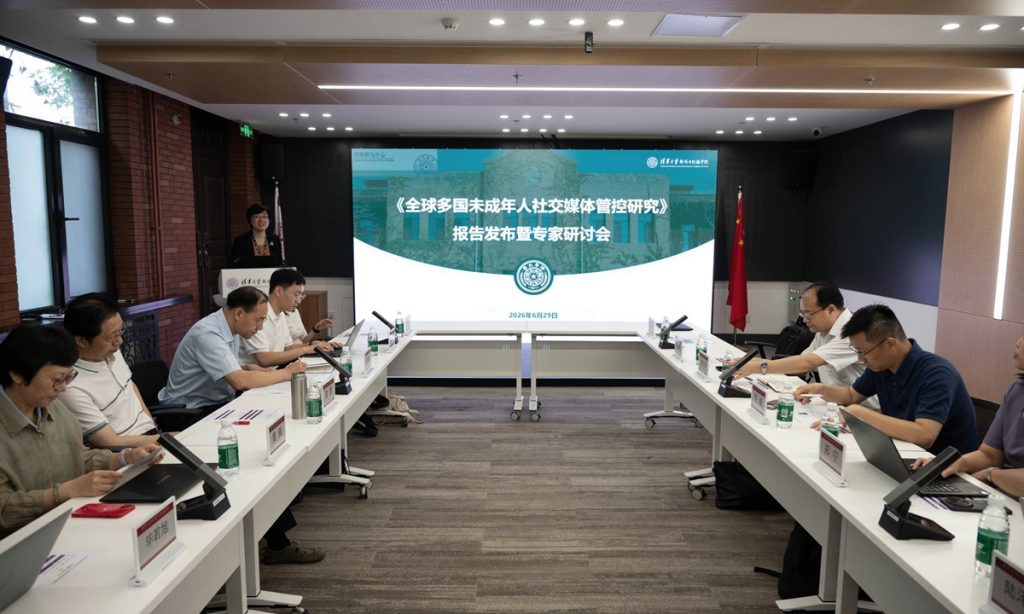
As the management of adolescence's social media usage becomes a global challenge, Tsinghua University's Center for Intelligent Media Studies on Monday issued a "Research Report on social Media Regulation for Minors in Multiple Countries Globally," which found that blanket ban on social media use is infeasible in practice and could lead to unexpected new problems, while the China approach balancing protection and development provides inspiration.
The research report categorized global social media management into three types: the complete ban on users under certain age plus parents' consent model, as represented by Australia and Indonesia; requiring platforms incorporation minor protection in product design and conducting risk assessment, as represented by the UK and the European Union; and the differentiated management based on user age, content attributes and platform risks, as represented by Germany and France, the Global Times learned from the center.
The report did a specific case study on Australia, which passed a law in 2024 which stipulated that children under the age of 16 are prevented from 10 key social media platforms since December 10, 2025.
Per BBC on June 27, the Australian government has announced it will double the maximum penalty for breaches of the nation's social media minimum age law to $99 million.
But it has been widely acknowledged that many are still able to access and use the banned apps, BBC reported.
The Tsinghua report found it has become prevalent for minors to bypass restrictions by using their parents' accounts, falsifying personal age information, or accessing networks via VPNs, indicating that age thresholds fail to substantially curb underage social media usage.
After the ban took effect, VPN downloads surged nearly threefold, and alternative platforms such as Lemon8 and Yope climbed rapidly on Australia's app rankings, with nearly half of Yope's users aged 16 and below. Meanwhile, the usage of WhatsApp also saw a slight increase. These phenomena demonstrate that minors' social media demands have not been eliminated, but have merely shifted to less regulated online spaces that are even more difficult to supervise, according to the report.
Analysis of 42,700 online comments related to the policy and a survey on more than 1,000 local Australians found that more than 60 percent online feedbacks are negative; only 39.2 percent of the surveyed are aware of the concrete contents of the policy and only 18.5 percent believe the ban works well.
The report concluded that risks concerning minors' online engagement stem from the overlapping effects of multiple factors including platform mechanisms, content ecosystems, as well as family and school education.
A one-size-fits-all ban is not an effective governance approach, and a global consensus has gradually emerged in favor of refined and categorized regulation. China has established a comprehensive minor online protection system centered on the Minor Network Protection Regulations, covering anti-addiction mechanisms, age-specific minor modes, and real-name registration for online platforms, said Jiang Qiaolei, professor and associate Chair of the school board at Tsinghua University's School of Journalism and Communication, when she delivers the research report.
This systemic approach is aligned with the global trend of tailored and targeted management of social media for minor protection purposes, Jiang said.
Scholars attending the Monday symposium also shared the consensus that government ban or legislation alone cannot solve the complexity of social media management, and the joint efforts of authorities, family and platforms are needed to streamline the management.
A groundbreaking ceremony for the Matesevo-Andrijevica highway project in Montenegro was held in Kolasin on Friday of local time, marking the start of construction on the country's largest infrastructure project currently under way, the Global Times learned from POWERCHINA Chengdu Engineering Corporation Limited on Monday.
The highway, also known as the MA highway project, is a key section of Montenegro's Bar-Boljare Highway. With a main line of about 22 kilometers, the project is being built by a consortium comprising Power Construction Corporation of China, Ltd, STECOL Corporation and POWERCHINA Chengdu Engineering Corporation Limited (POWERCHINA Chengdu)
Designed in accordance with European standards and local Montenegrin regulations, the highway will have a designed speed of 100 kilometers per hour. The route includes dozens of bridges, two tunnels and one service area, with a high bridge-and-tunnel ratio and complex geological conditions.
The project will take 14 months for design and 46 months for construction, with a total project period of five years.
A project representative from POWERCHINA Chengdu said the company will strictly follow Montenegrin regulations and European standards, while giving equal priority to safety, quality and green construction throughout the process. The team will also respond scientifically to complex geological challenges and coordinate bridge and tunnel construction to ensure the project is completed on schedule and to high standards.
Once completed, the highway is expected to shorten travel time from the capital Podgorica to Andrijevica to 38 minutes, significantly improving transport convenience for residents in the Lim River Valley and northern Montenegro while boosting economic development along the route.
The launch of the project also creates a platform for trilateral cooperation among China, Montenegro and European financial institutions, highlighting the vitality of multilateral collaboration, according to the company.
The project will incorporate green development principles throughout construction, with ecological protection, health and safety management and construction work advanced in tandem. It aims to become an environmentally friendly and socially harmonious demonstration project for sustainable development.
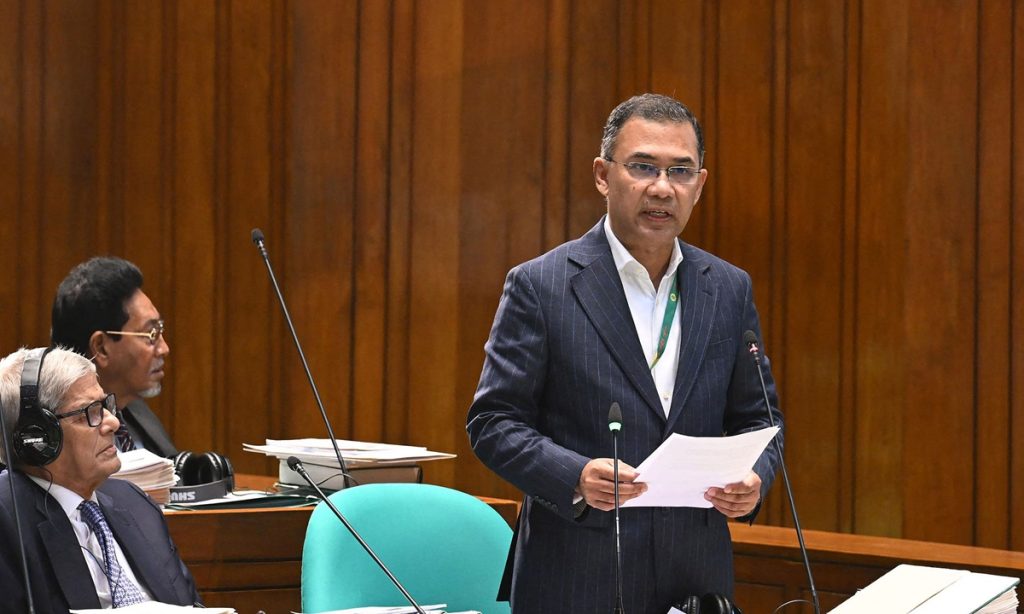
Bangladesh Prime Minister Tarique Rahman is set to visit Malaysia and China starting Sunday on his first overseas trip since taking office in February, according to media reports. The news has sparked discussion in Indian media, which views Rahman's outreach to China as a signal of his foreign policy priorities, as he bypasses India, which has traditionally been the destination of such inaugural visit.
The twin-country trip kicks off in Malaysia on Sunday, Bangladesh's Foreign Secretary Asad Alam Siam said at a media briefing in Dhaka on Saturday, according to Bloomberg.
Rahman will hold bilateral talks with Prime Minister Anwar Ibrahim in Malaysia from Sunday to Monday, where Dhaka plans to press Kuala Lumpur to absorb more Bangladeshi expatriate workers, per Bloomberg.
Rahman will arrive in China on Monday night from the Malaysian capital, Kuala Lumpur, for a five-day visit, according to Bangladesh media Prothom Alo.
Bangladeshi officials state that during the Prime Minister's upcoming visit to China, discussions will focus on Chinese financing and cooperation across projects in various sectors, Prothom Alo reported.
Rahman's visit has not yet been confirmed by the Chinese Foreign Ministry as of press time.
China is willing to carry forward traditional friendship with Bangladesh, enhance political mutual trust, deepen practical cooperation, and be the most reliable partner in Bangladesh's national development process, said Chinese Foreign Minister Wang Yi in May during talks with Bangladeshi Foreign Minister Khalilur Rahman in Beijing, per Xinhua.
Bangladesh appreciates the long-term support and assistance from China, looks forward to further deepening all-round friendship and cooperation, elevating the comprehensive strategic cooperative partnership between the two countries to a new level, and boosting its own economic and social development, the Bangladeshi Foreign Minister said.
Bangladesh welcomes Chinese enterprises to invest in Bangladesh and is ready to provide a stable, sound and predictable business environment, he added.
Indian media have been closely following Rahman's trip. The Hindustan Times reported on Sunday that Rahman has chosen "Malaysia and China for his first foreign visit to expand overseas employment opportunities and drum up investments, signaling his foreign policy priorities by bypassing India, which has traditionally been the destination for such trips."
India media the Hindu also reported that Rahman is set to visit Malaysia and China on his first trip abroad since assuming office, "bypassing neighboring India as his inaugural destination."
In March, Rahman has written to Indian Prime Minister Narendra Modi accepting his invitation to visit India, while signaling a broader effort to reset bilateral ties after a period of strain, according to the Indian Express.
Indian media's close attention to the visit reflects the evolving state of India-Bangladesh relations. For a long time, India has been Bangladesh's most important neighbor, and the two countries maintained close cooperation across a wide range of areas. However, bilateral ties have encountered setbacks since the fall of former Prime Minister Sheikh Hasina 's government and are still undergoing a period of adjustment, with relations yet to return to a more stable footing, Qian Feng, director of the Research Department at Tsinghua University's National Strategy Institute, told the Global Times.
Qian said some voices in India's media and strategic circles continue to view regional affairs through the lens of India's traditional leadership role in South Asia, leading to concerns that closer China-Bangladesh ties could diminish New Delhi's influence, particularly in Bangladesh.
However, China-Bangladesh cooperation is not directed at any third party and should not be viewed simply through the prism of geopolitical competition, Qian noted.
During a meeting with Bangladeshi Foreign Minister Khalilur Rahman in Beijing in May, Wang said that China's development of relations with Bangladesh and other South Asian countries does not target any third party, nor should it be affected by any third party, according to Xinhua.
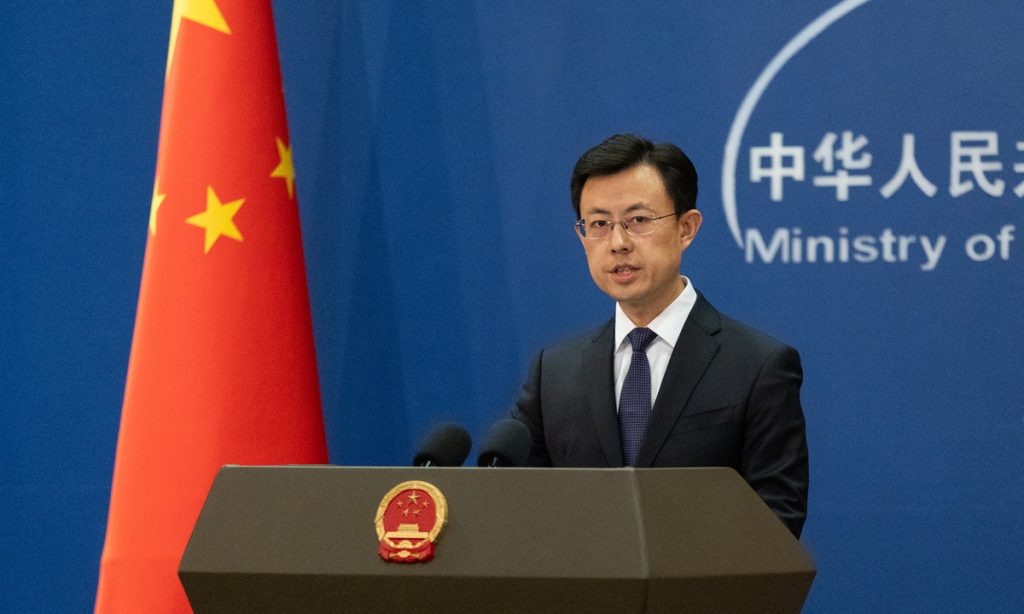
As Austrian Federal Minister for European and International Affairs Beate Meinl-Reisinger is set to kick off a five-day visit to China on Monday, Chinese Foreign Ministry spokesperson Guo Jiakun said on Monday that as the two countries mark the 55th anniversary of diplomatic relations, China stands ready to have closer exchanges, build up consensus and carry forward the friendship with Austria for greater progress in developing the friendly strategic partnership.
Austrian foreign minister's visit to China comes amid fluctuation in the EU's policy toward China, as within the EU, a differentiation has emerged among countries advocating strategic competition or pragmatic cooperation toward China, some Chinese observers said.
Austria, as a country that maintains relatively close economic and trade cooperation with China, is expected to adopt a more pragmatic approach through this visit, which may encourage more practical reflections in its China policy, they noted.
According to Austrian Broadcasting Corporation, this is the first working visit to China by a member of Austria's current government. Beate Meinl-Reisinger is scheduled to visit Shanghai on Tuesday, aiming to gain first-hand insights into the opportunities created by Austria-China cooperation, the Austrian media said.
China is among Austria's most important trading partners, Austrian Broadcasting Corporation said.
Ahead of the trip, Beate Meinl-Reisinger said Austria's goal is to strengthen European sovereignty, reduce dependencies, and at the same time maintain stable trade relations with China based on fair, reliable, and rules-based conditions, according to the Austrian media report.
The EU's policy toward China has recently shown fluctuations, with some members even resorting to tariff measures and trade protectionism, Zhao Junjie, a senior research fellow at the Institute of European Studies at the Chinese Academy of Social Sciences, told the Global Times on Monday.
"For now, clear divisions have emerged within the EU on China policy, including camps advocating trade protectionism and ideological confrontation, as well as those promoting pragmatic cooperation and free trade. The latter group, often more deeply tied to China economically, supports expanding free trade and introducing Chinese technologies and industrial models, taking a rational, practical, and win-win approach," Zhao said.
EU leaders debated on Thursday new and tougher measures that could be needed to curb the bloc's growing trade deficit with China and its heavy reliance on the world's second-largest economy for rare earths and other critical supplies, Reuters reported.
However, there has been a divergence over the response to the issue, as countries like France advocate for a tougher line, while Germany, the EU's biggest exporter, and Spain, increasingly home to Chinese investments, are more cautious, according to Reuters.
Austria's economic and trade relations with China have grown increasingly close in recent years. At the same time, Austria remains competitive in several sectors, including electronics, machinery, and pharmaceuticals, maintaining strengths in both traditional and modern industries, Zhao noted.
"Against this backdrop, the Austrian foreign minister's visit to China can be seen as reflecting a more pragmatic and dialogue-oriented strand within the EU - one that favors engagement, mutual benefit, and cooperation, and demonstrates a relatively rational approach to China policy," he added.
Since the establishment of diplomatic relations, bilateral trade between China and Austria has increased more than 400-fold over the past five decades, according to China's Ministry of Commerce.
By 2025, China had become Austria's third-largest trading partner. To date, more than 650 Austrian enterprises have invested and operated in China, with over 1,500 joint projects spanning high-value-added sectors such as semiconductors, fine chemicals, and automotive components, Qi Mei, the Chinese Ambassador to Austria, wrote in an article published in People's Daily in May.
At the same time, an increasing number of Chinese companies are using Austria as a gateway to expand into Central and Eastern European markets. Over 50 Chinese enterprises have established a presence in Austria, covering industries including machinery, automotive, telecommunications, and finance, Qi said.
Chinese new energy vehicles have been assembled and rolled off production lines in Styria, while China-made trains operate between Vienna and Salzburg, injecting new momentum into local development, the Chinese diplomat wrote.
China and Austria are friendly strategic partners. This year marks the 55th anniversary of diplomatic relations. Bilateral ties are in good shape with practical cooperation in various fields making steady progress, and cultural and people-to-people exchanges creating numerous highlights, Chinese foreign ministry spokesperson Guo Jiakun said.
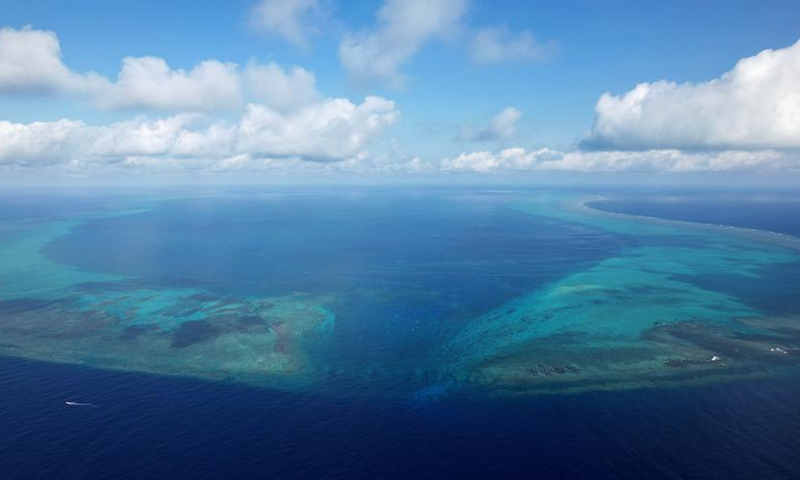
The US has given four autonomous underwater and surface vehicles to the Philippines to boost maritime surveillance, according to media reports on Tuesday. The delivery comes as the Philippines is continuing its provocative acts in the South China Sea, and if the Philippines increasingly deploys unmanned systems in these waters, the risk of a miscalculation could rise, some Chinese observers warned.
The US government has given four Ocean Aero Triton autonomous underwater and surface vehicles to the Philippine military to boost Manila's ability to monitor its waters and spot "potential threats," Reuters reported, citing the US Embassy in the Philippines.
The Philippine Navy spokesperson claimed the unmanned systems are not only surface unmanned systems but also underwater unmanned systems, and this will contribute to maritime domain awareness not only of the Philippine Navy but also of the Armed Forces of the Philippines, Philippine media outlet the Inquirer reported on Tuesday.
Both Reuters and the Inquirer highlighted the delivery of these drones comes as frictions between the Philippines and China are growing in the South China Sea.
By giving autonomous underwater and surface vehicles to the Philippines, the US emboldens Manila to ramp up its provocative maritime capabilities through unmanned equipment, Chen Xiangmiao, a research fellow at the National Institute for South China Sea Studies, told the Global Times on Tuesday, warning that this would increase the risk of friction and even unintended escalation.
In addition to the joint drill that is considered a disruption to regional peace, the US is also stirring regional security tensions by acting through the Philippines by delivering those unmanned vehicles as on the surface, these systems are being provided to the Philippine Navy for its use. However, the key aspects of operation and control may still remain in American hands, Song Zhongping, a military affairs expert, told the Global Times on Tuesday.
"While the equipment is deployed at Philippine military bases and operated on a day-to-day basis by Philippine personnel, data collection and remote-control functions are likely to be managed by the US through satellite communications," Song said.
This would allow the US Navy to obtain real-time maritime environmental data gathered by the systems, potentially supporting navigation analysis, operational planning and other military purposes, Song added.
When asked about the joint military exercise between the US and Philippines that included about 10,000 US services members and also included Japanese forces, Chinese Foreign Ministry spokesperson Guo Jiakun said at a press conference on April 20 that what the Asia-Pacific needs most is peace and tranquility, and the last thing the region needs is division and confrontation as a result of the introduction of external forces.
No military and security cooperation should be conducted at the expense of mutual understanding and trust as well as peace and stability in the region, Guo said.
According to available information, two Japanese nationals were detained by the competent Chinese authorities in accordance with the law for violating Chinese laws, Chinese Foreign Ministry spokesperson Guo Jiakun said on Wednesday in response to a media inquiry regarding that in late May, two Japanese male employees of a major Japanese electrical machinery company in Dalian, Liaoning Province, China, were detained by Chinese authorities and whether this is related to China's tightening of export controls on rare earth-related items.
Guo said that the Chinese side has informed the Japanese side of the relevant details of the case. "I would like to emphasize that Japan should educate and remind its citizens and companies in China to abide by Chinese laws and regulations," said Guo.
A reporter followed up by asking whether China could provide specific details regarding the detention of the two Japanese male employees in Dalian. Guo said that "for further information, I suggest referring your question to the competent Chinese authorities."
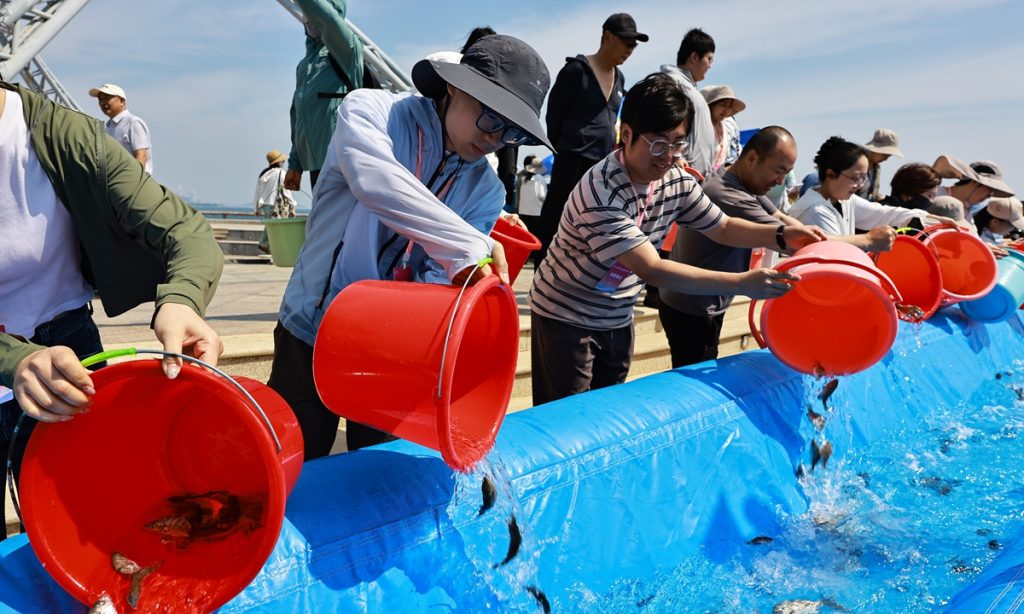
China and South Korea are working together to make the Yellow Sea's fishery "pie" bigger, turning shared conservation efforts into a growing source of ecological and economic benefits for fishing communities on both sides. A total of 330,000 greenfin horse-faced filefish juveniles were released on Tuesday morning in Yantai, East China's Shandong Province, at the city's landmark Tianma Trestles, as part of an annual joint stock enhancement and release event between China and neighboring South Korea.
The event aims to conserve fishery resources and protect the ecological environment of the Yellow Sea — a traditional fishing ground and shared marine ecosystem that has sustained Chinese and South Korean fishing communities for generations — while promoting the recovery and sustainable use of fishery resources.
Tuesday's event marked the seventh edition of the China-South Korea Joint Stock Enhancement and Release of Fishery Resources which has become an annual routine for both countries since the 2018 launch year, except during the years affected by the COVID-19 pandemic.
The South Korean side, hosting this year's ceremony, released 4.29 million aquatic fry and juveniles with key commercial value, including small yellow croaker, red seabream and swimming crab, into the Yellow Sea from Incheon. The Chinese side held a simultaneous release in Yantai, Shandong Province, releasing 3 million aquatic juveniles with key commercial value, including greenfin horse-faced filefish, swimming crab and blackhead seabream, the Global Times learned from the event's main organizer, the Chinese Ministry of Agriculture and Rural Affairs, on Tuesday.
Cui Gang, a veteran fisherman and boat owner with more than 25 years of fishing experience, has spent over a decade operating in the jointly managed marine area in the Yellow Sea between China and South Korea.
Speaking to the Global Times ahead of the stock enhancement and release event, Cui repeatedly praised the two countries' joint stock enhancement efforts, saying that, from his own experience, the program has helped increase his annual income by about 20 to 30 percent.
Since the signing of the Fishery Agreement between two sides in 2000, the two governments have cooperated through the Joint Committee on Fisheries in multiple areas including fishing access arrangements, fishery resource survey, and fisheries law enforcement, achieving fruitful results, according to the Chinese Ministry of Agriculture and Rural Affairs.
After the release events, commercially valuable aquatic species have grown larger in size. For example, greenfin horse-faced filefish and red seabream have also become more commonly caught and larger in size, meaning better market price and profit for our fishermen, Cui explained.
According to the Yellow Sea Fisheries Research Institute, Chinese Academy of Fishery Sciences (YSFRI), the core goal of the joint stock enhancement and release program is to promote the conservation and sustainable use of fishery resources while protecting the ecological environment of the Yellow Sea.
Ma Zhuojun, secretary of the institute Party committee and the institute's deputy director, told the Global Times that the species selected for release are migratory species with high commercial value and shared with both nations, such as small yellow croaker, blackhead seabream, greenfin horse-faced filefish, red seabream and swimming crab, while highlighting that these releases help replenish fishery resources and benifit fishermen in both countreis.
Institute experts also explained that China and South Korea communicate through mechanisms such as the China-South Korea Joint Committee on Fisheries on the species, quantity, timing and location of fish releases, as well as follow-up assessments of their effectiveness. Experts from both sides explain fishery resource survey results, the ecological characteristics of different species and the needs of release-effect evaluations before consulting with each other to formulate plans that are relatively scientific and operationally feasible.
Such cooperation, however, also requires continuous coordination, they noted. "It is only natural that the two sides sometimes differ in terms of the priority species, size standards for released fry and juveniles and methods used to assess release effects. These differences are gradually coordinated through expert group meetings, data exchanges, technical discussions and joint surveys."
One example is the release of swimming crabs, which has received close attention from both sides in recent years, especially in terms of how its effects should be evaluated. Exchanges on molecular marker technology for assessing the effects of swimming crab releases are aimed at using more scientific methods to determine the contribution of released stock and continuously improve release plans.
South Korea saw a notable increase in swimming crab catch in its western waters (Yellow Sea) in the autumn of 2025, while the relevant TAC (Total Allowable Catch) also remained at a relatively high level, which may indicate improved resource conditions and recovery potential, though long-term monitoring is still needed. Stock enhancement releases have played an important role in this process, according to the institute experts.
Wang Hongliang, head of the Yantai Marine and Fishery Supervision and Inspection Detachment, told the Global Times that for this year's China-South Korea joint release event, Yantai plans to release a total of 3 million aquatic juveniles, including greenfin horse-faced filefish, blackhead seabream and swimming crab.
Through the joint release event, Yantai hopes to achieve a combination of economic, ecological and social benefits, Wang noted. The event is expected to help increase marine fishery resources and bring tangible gains to fishermen in both countries, while also protecting marine biodiversity and maintaining the balance of the marine ecosystem. More broadly, it is also aimed at raising public awareness of ecological conservation and building a stronger consensus on protecting the sea.
Since 2018, China and South Korea have jointly held seven such events to date, releasing 18.75 million aquatic fry and juveniles, according to data provided by the Chinese Ministry of Agriculture and Rural Affairs.
These efforts have made a positive contribution to conserving commercial fishery resources in the Yellow Sea, improving the marine ecological environment and increasing the income of fishermen in both countries, the ministry hailed in a release on Tuesday.
Qu Jiangbo, president of the Yantai Aquatic Biological Resources Conservation Association and legal representative of Tianyuan Aquaculture, told the Global Times that his company was responsible for maintaining and caring for the fry and juveniles released during this year's event and he has been actively participating in the joint release since its launch.
"The fish we release can swim into South Korean side waters, while the fish released by South Korea can also come into waters on our side" Qu said. "That is why the two sides carry out joint releases at the same time to increase fishery resources and boost incomes for fishermen on both sides."
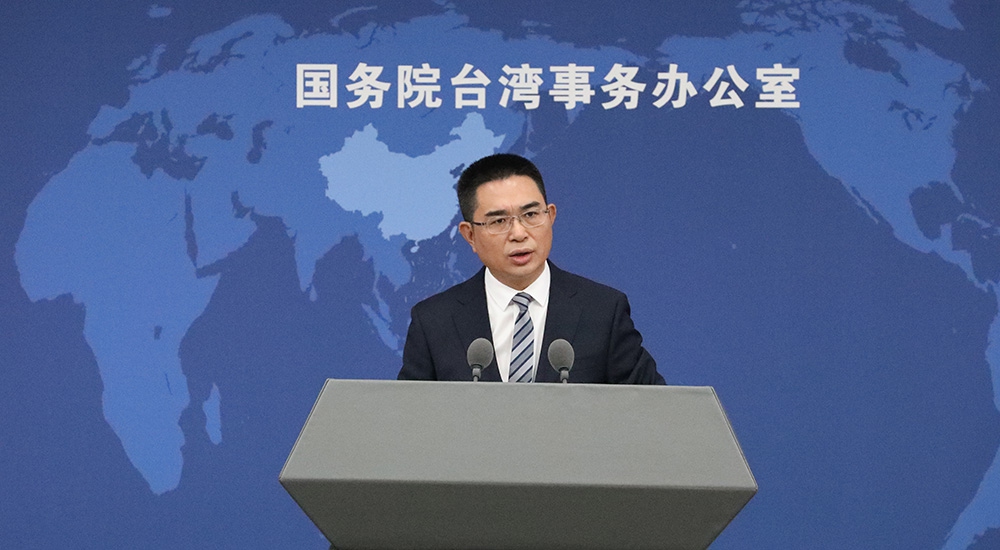
The Chinese mainland firmly opposes any form of military contact between the US and China's Taiwan region, Chen Binhua, spokesperson for the State Council Taiwan Affairs Office, said at a regular press conference on Wednesday. Chen made the remarks in response to a question about recent Taiwan regional media reports claiming that US military personnel have been stationed at Taiwan's "military intelligence bureau" for the first time, with speculation that the deployment is related to cooperation in "monitoring the mainland."
The Democratic Progressive Party (DPP) authorities are deliberately escalating confrontation across the Taiwan Straits, Chen said, warning that the further they go down the wrong path of "seeking independence by relying on external forces" and "seeking independence through military means," the more they will bring destruction upon themselves.
Taiwan media outlet claimed that some US military personnel have been stationed in the bureau since the beginning of this year, and these personnel may be members of a program codenamed "Meiyuan."
Described as "Taiwan region's most secretive military unit," Meiyuan is responsible for intercepting electronic signals from the Chinese mainland's central region and the southeastern coastal regions, and the South China Sea, Taiwan regional media outlet CTi News claimed.
Zhang Wensheng, deputy dean and a professor at the Taiwan Research Institute at Xiamen University, told the Global Times previously that the intelligence cooperation between two sides is self-congratulatory. The US prioritizes technical intelligence while DPP authorities focus more on human intelligence, leaving neither side able to fully capitalize on the other's strengths, Zhang added.
Continuous efforts by the Chinese mainland to bolster counterintelligence and information security measures render such US-Taiwan schemes unworkable, Zhang said.
Such intelligence collaboration represents a severe breach of international law and the three China-US joint communiques, as these erroneous acts not only encroach upon China's sovereignty and territorial integrity and impair China's national interests, but also run counter to the one-China principle to which the US has committed itself, the expert said.
Chinese embassies and consulates in the US, Canada and Mexico on Tuesday night reminded Chinese citizens traveling to the three countries for the 2026 FIFA World Cup to stay vigilant, watch matches in a civilized manner and guard against various risks to ensure their personal and property safety.
The tournament opens on June 11 and 104 matches will be played in Canada, Mexico and the US, with the final to be played on July 19, according to the Xinhua News Agency.
The embassies and consulates in the US advised Chinese citizens to purchase tickets through official channels, familiarize themselves with refund policies and wait until travel plans are confirmed before purchasing tickets.
They also warned against transferring money to strangers on social media for ticket purchases and urged fans to be wary of scams involving scalped tickets, purported ticket transfers, so-called insider tickets, heavily discounted offers and phishing links masquerading as the official FIFA website.
Travelers heading to the US should obtain a B1/B2 visa in advance. The US embassies and consulates in China noted that visa interview appointment wait times may be extended during the 2026 FIFA World Cup period, and advised applicants to submit their applications as early as possible.
Also, the embassies and consulates in Canada reminded travelers to make adequate pre-departure preparations. They advised Chinese citizens to consult official embassy and consulate websites in advance for information on local weather conditions, natural environment, cultural customs, public safety, laws and regulations, as well as entry and exit requirements, in order to carefully plan their trips and itineraries.
Travelers should obtain a Canadian visa before departure and ensure that the visa type, validity period and permitted length of stay are consistent with their travel purpose and plans, the embassies and consulates said.
Safety reminders also include avoiding undeveloped areas, unsafe locations, or restricted zones marked with warning signs for sightseeing, check-ins or following trends, and staying informed about reported hantavirus cases in Canada while taking appropriate health precautions.
Along with making pre-departure preparations and observing traffic safety, the Chinese embassies and consulates in Mexico noted that the summer season coincides with the country’s peak hurricane period, when storms, heavy rain, rising river levels and landslides may occur. Travelers are advised to keep track of local weather alerts and disaster updates.
They also cautioned that robberies and kidnappings still occur in some areas and urged travelers to remain vigilant.
Precautions against theft and robbery include keeping a low profile when going out and avoiding expensive jewelry, luxury accessories or conspicuous items. Travelers should dress simply and take care of their personal belongings, according to the Chinese embassies and consulates in Mexico.